Palace of Khudayar Khan
Field check requiredKokand's palace stands out because its palette and scale feel different from the blue-dominant monuments of Samarkand and Bukhara. It is the strongest single heritage stop in the Fergana Valley.
Shown: 12
Kokand's palace stands out because its palette and scale feel different from the blue-dominant monuments of Samarkand and Bukhara. It is the strongest single heritage stop in the Fergana Valley.
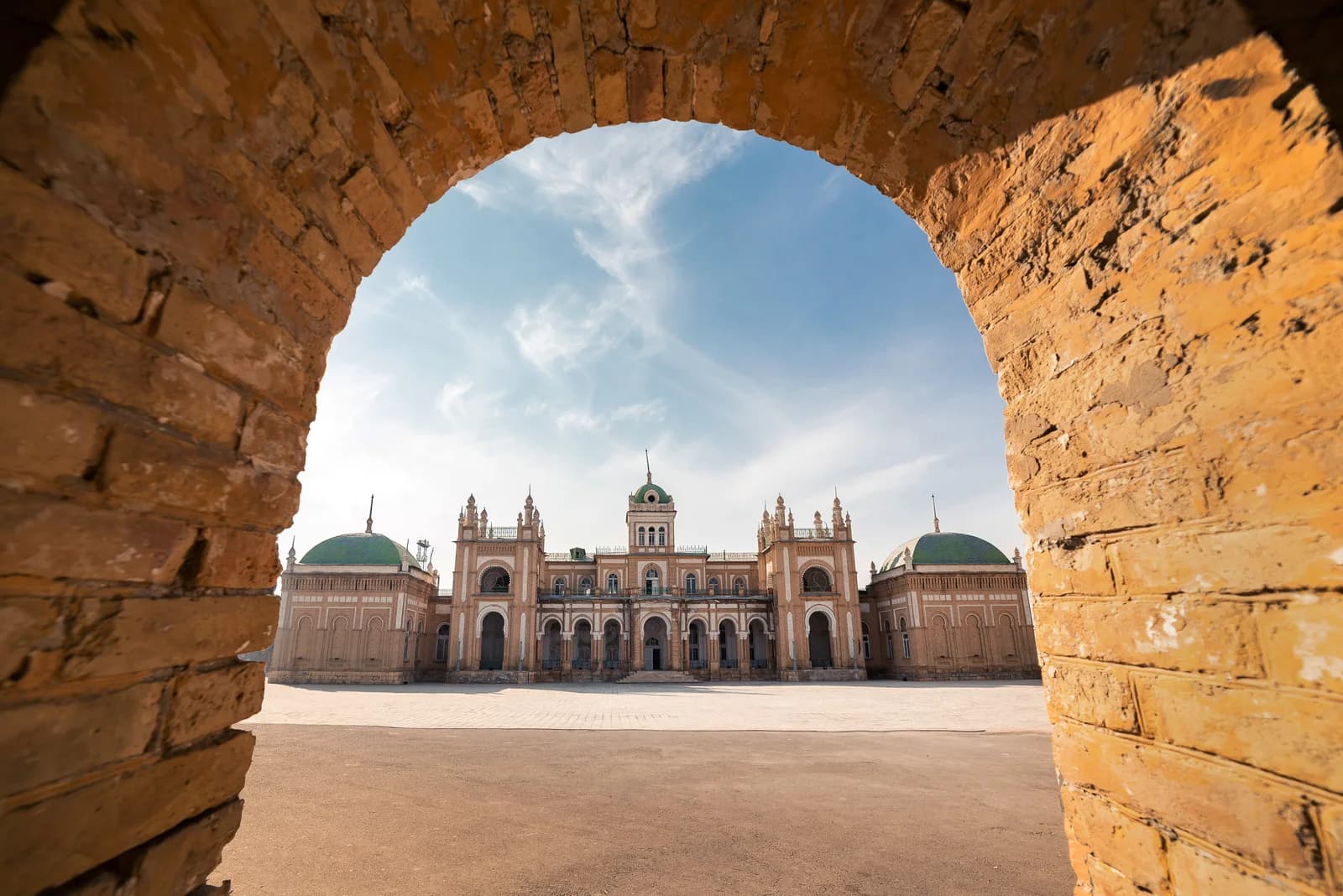
A distinctive palace stop in Kagan, outside Bukhara’s old town. Visit for the facade and architectural detail, while checking current access to the grounds and interiors separately.
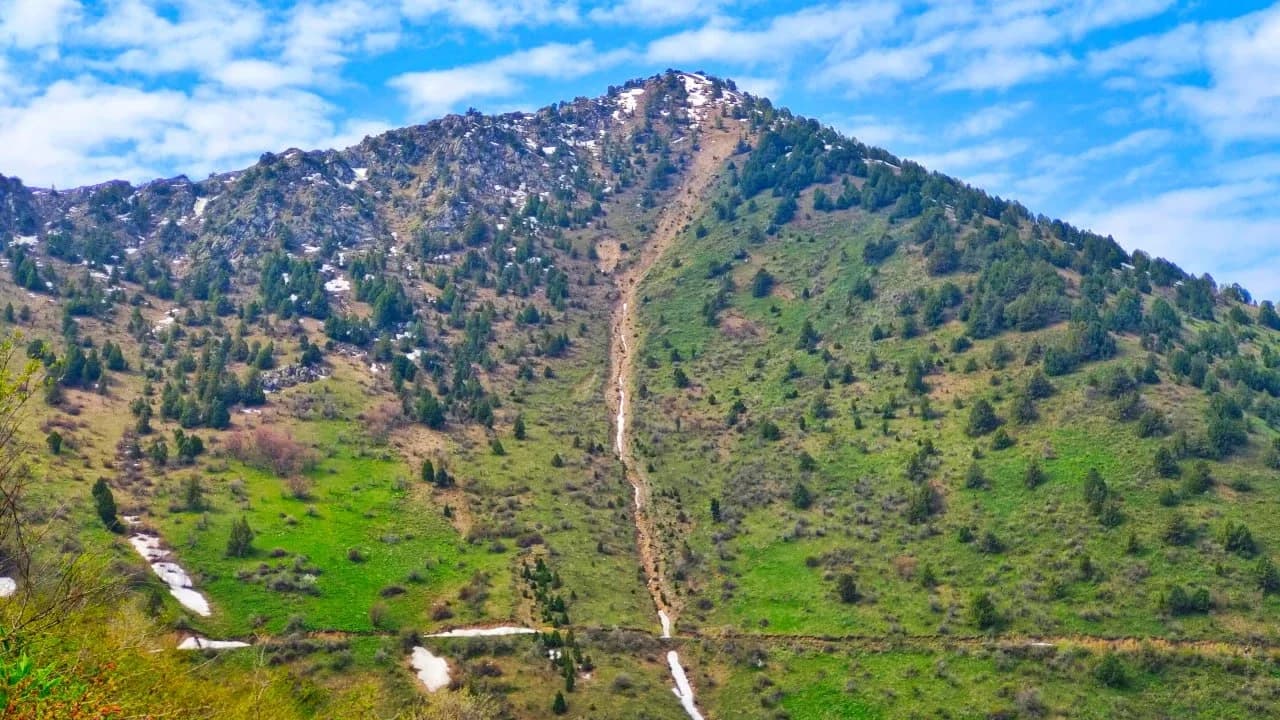
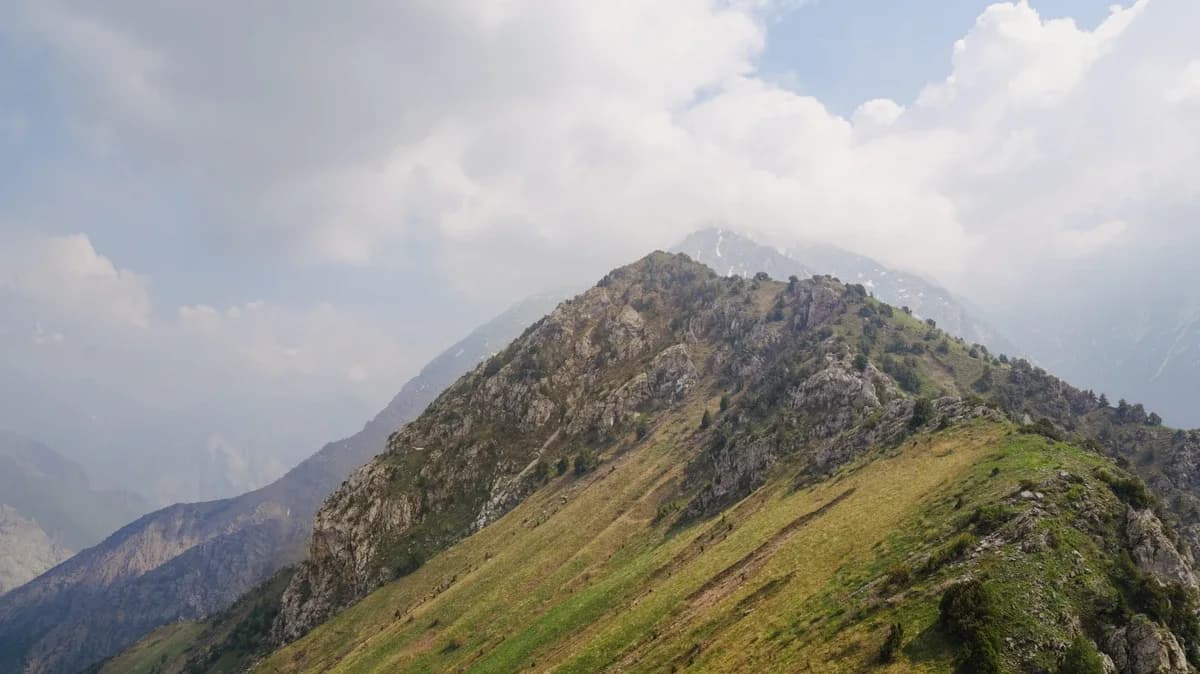
A green mountain ridge with scattered trees and a rocky crown. Paltau Peak offers a different side of the valley from the better-known waterfall below.
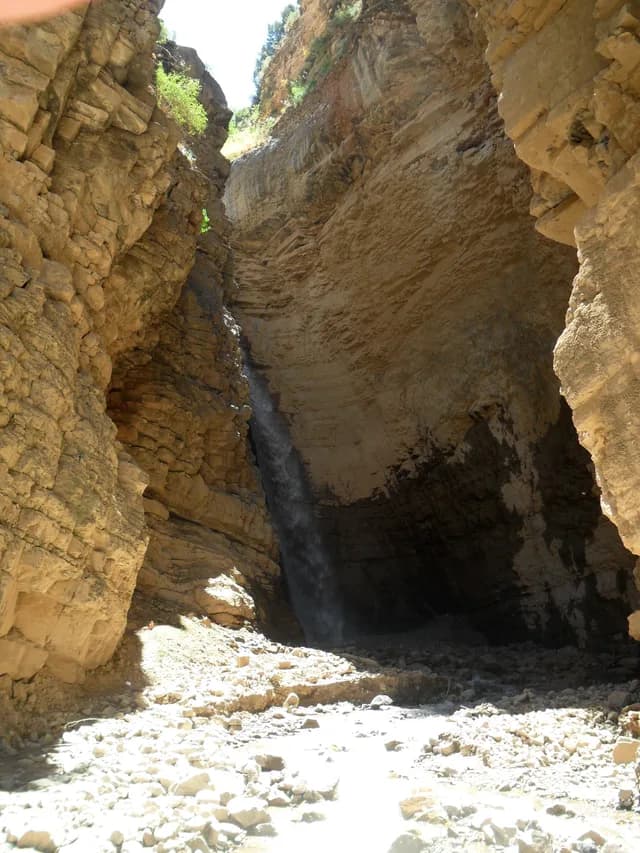
A waterfall in a rocky gorge near the Paltau valley, for a walking visit rather than a drive-up stop.
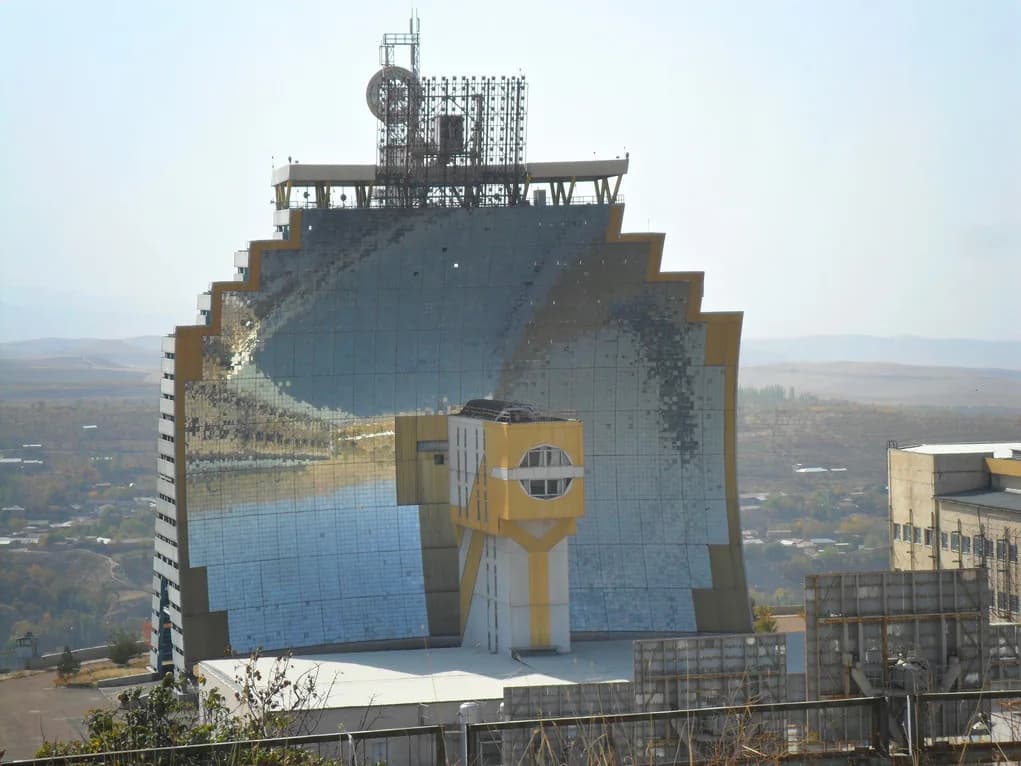
A scientific complex near Parkent whose mirrors concentrate sunlight for materials research. This is an operating research site: arrange a permitted visit rather than assuming open access.
A rocky mountain destination above green slopes in the Chimgan area. Explore views from the approach and use the separate recorded hiking track to plan the climb.
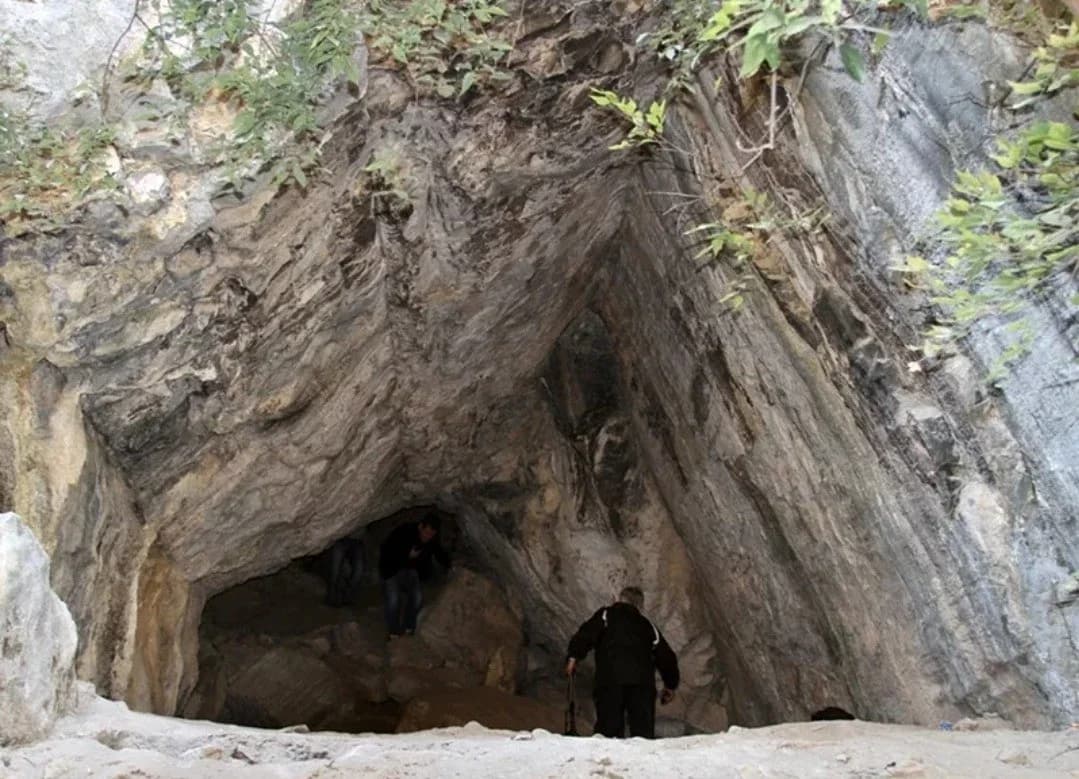
Peshagor Cave opens into a rocky slope in the Zomin area of Jizzakh Region. The small, dark mouth contrasts with the pale rough stone around it. It belongs to a group of caves near Peshagor village and the Khujay Serob Ota shrine, but the cave itself is the natural feature marked here.
The signature Bukhara ensemble with minaret, mosque and madrasa in one compact core. This is the place to feel the old city breathing around active religious architecture, especially at the edges of morning and evening.
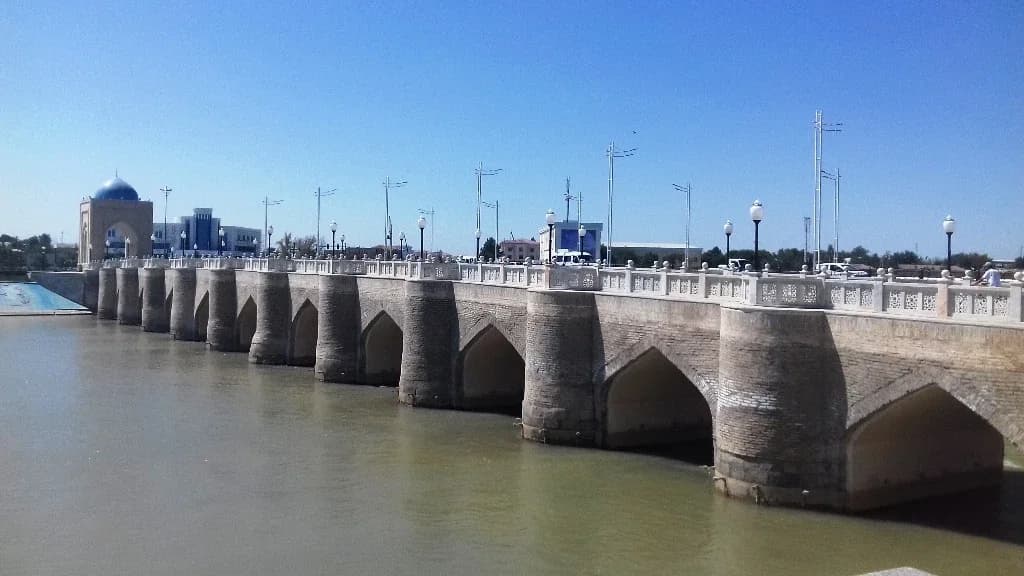
Qarshi's historic bridge crosses the Qashqadaryo with a long sequence of masonry arches. Unlike a monument viewed from one front, its character comes from repetition: pointed openings, solid piers and the continuous line of the parapet stretch across the river.
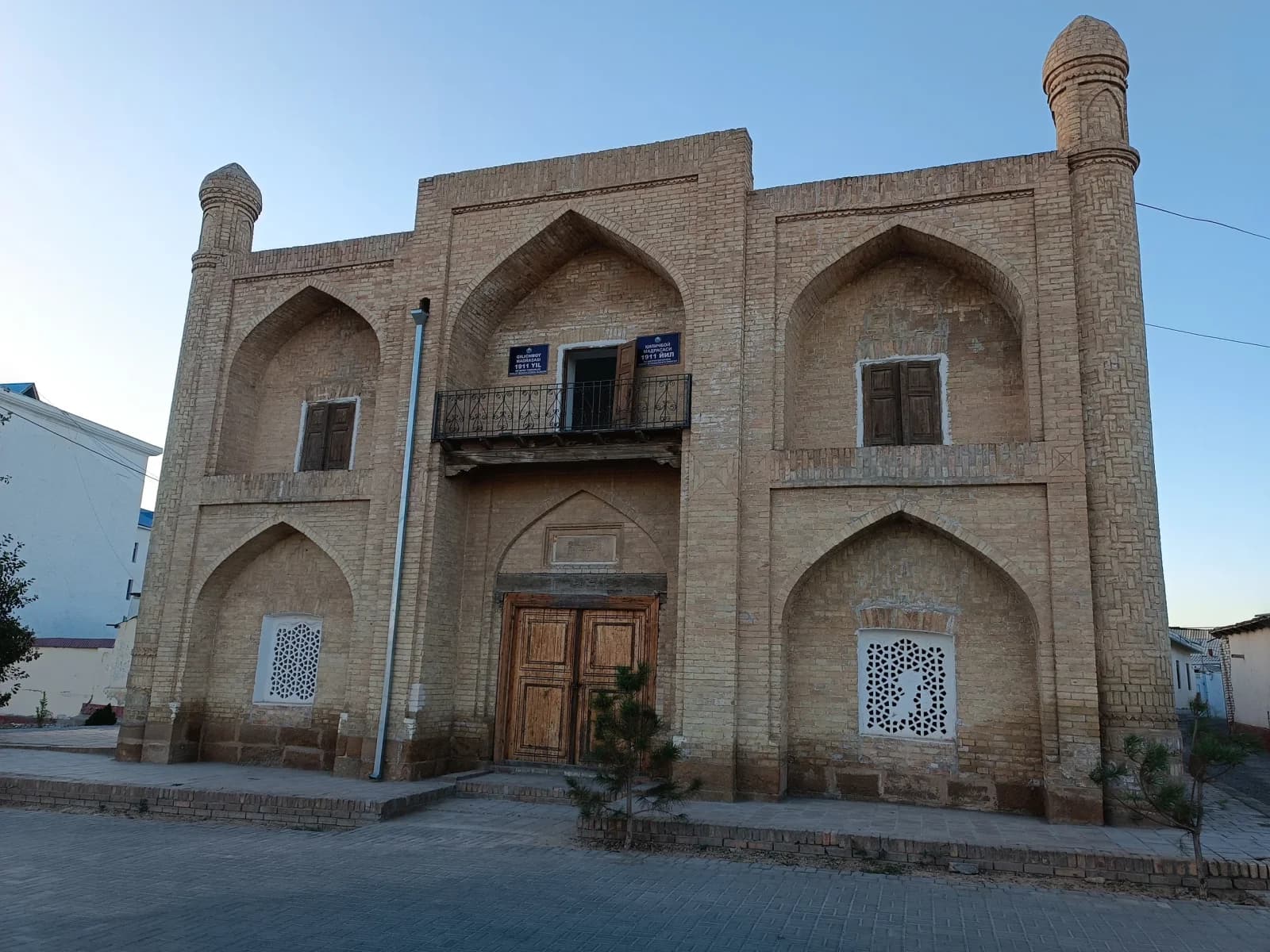
Qilichboy Madrasah offers a compact architectural stop in Qarshi. The early-twentieth-century building has a nearly symmetrical brick front with three tall recessed arches. Small corner towers frame the composition, while a wooden doorway and the balcony above it mark the centre.
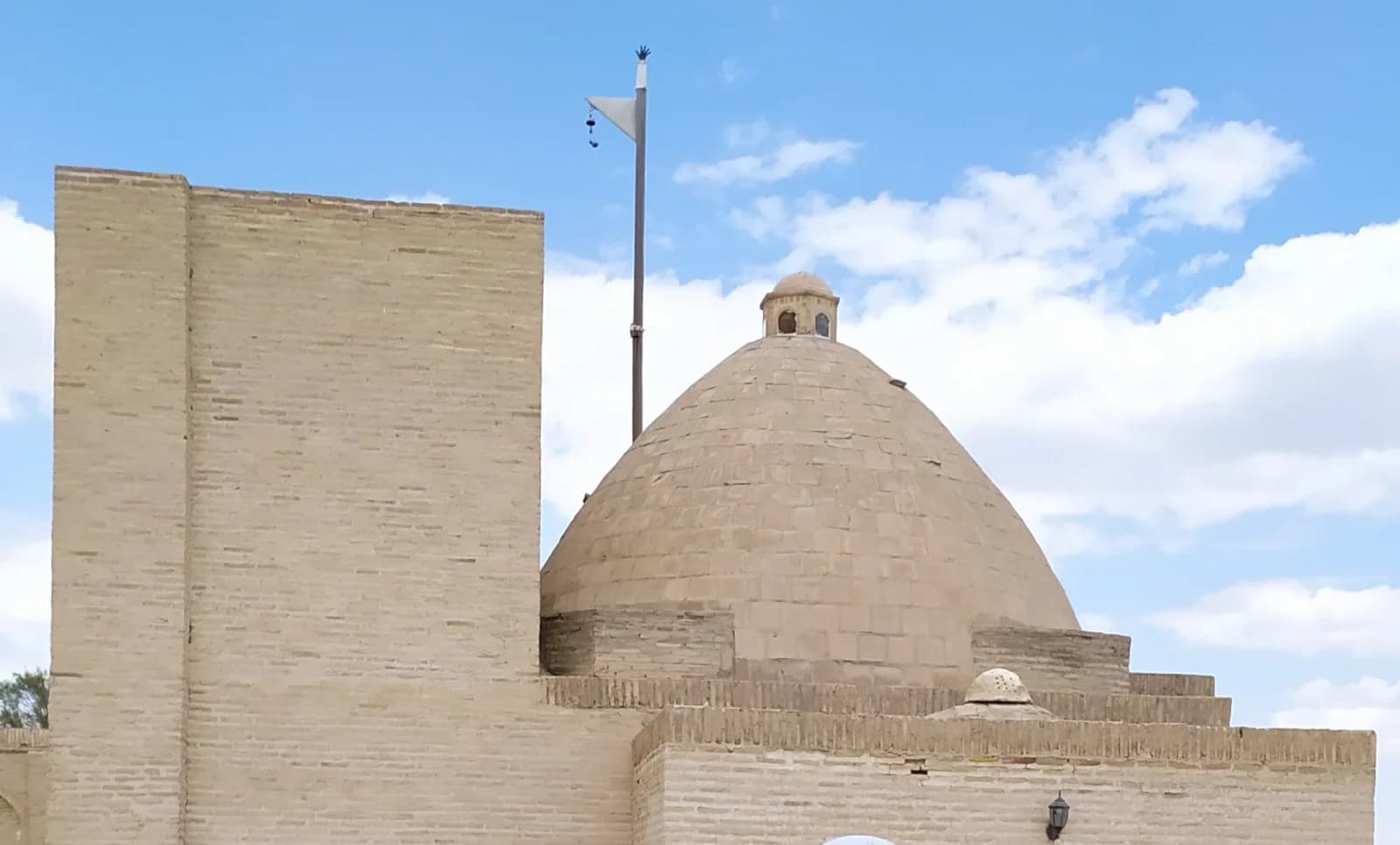
Qizbibi is a historic architectural complex in the Jondor area west of Bukhara. The reviewed exterior is dominated by pale brick, a large rounded dome and a tall rectangular wall. Its restrained appearance invites attention to shape and masonry rather than a richly coloured facade.
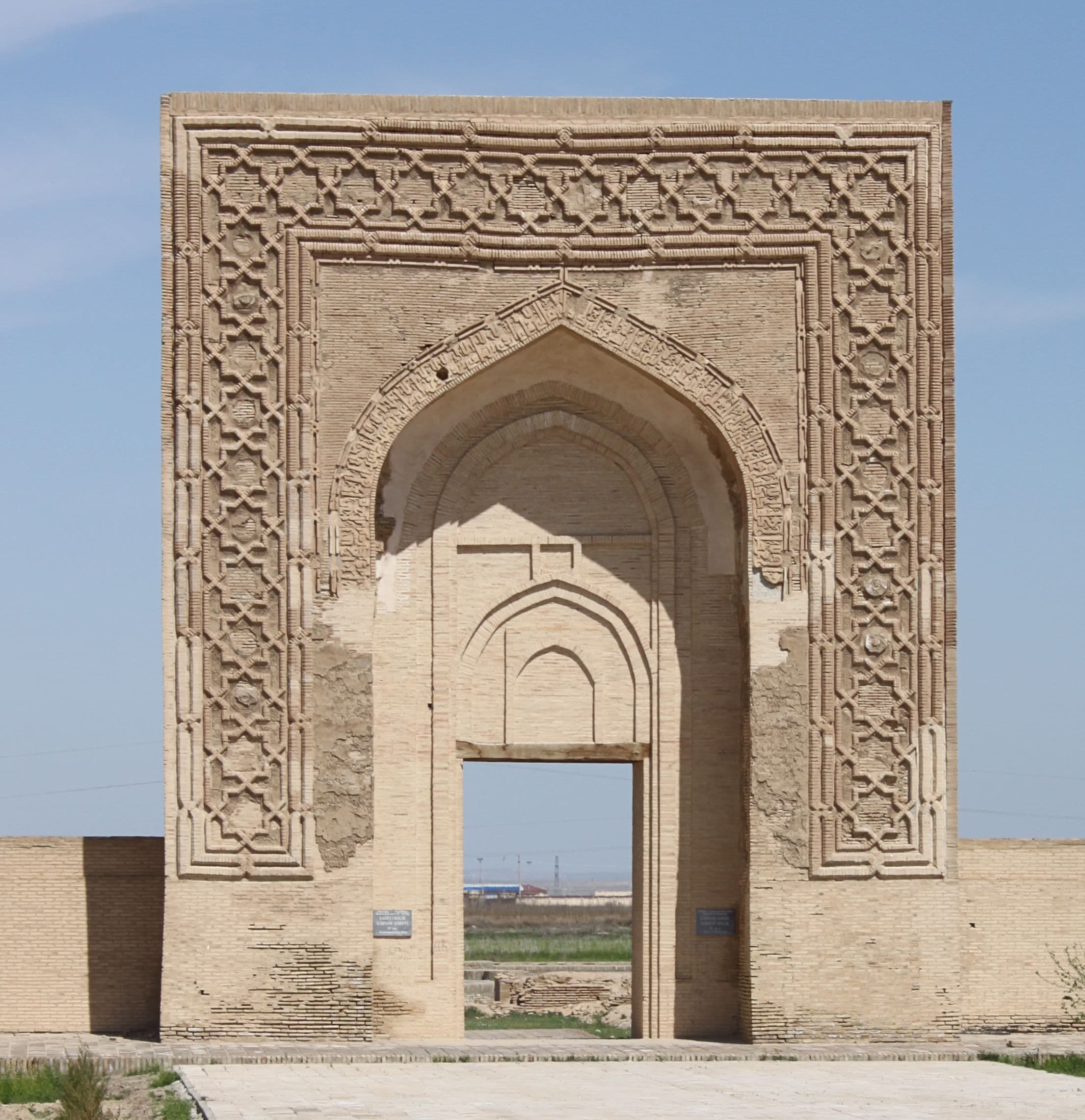
Rabati Malik gives rare Silk Road road-infrastructure context between the headline city monuments. Even in ruined form, the surviving portal and reservoir logic help explain how long-distance movement across this corridor was organized.